
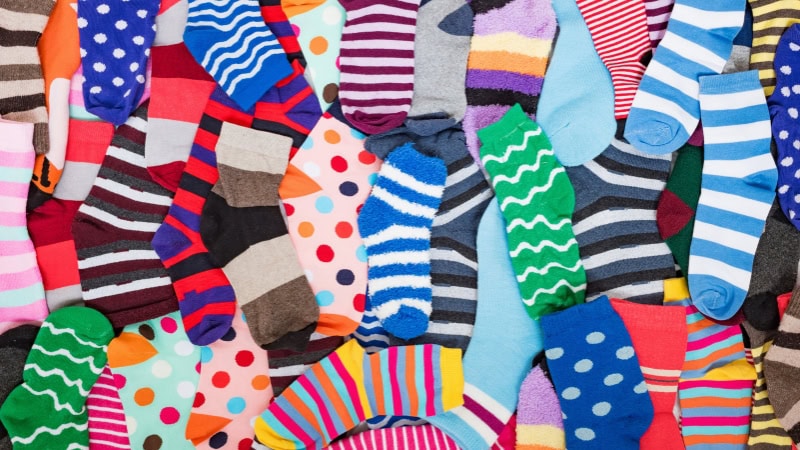
Socks are an essential part of our daily wardrobe, yet most of us rarely think about the complex journey they take before reaching our dresser drawers.
From selecting the perfect blend of natural and synthetic fibers to the final steam-shaping process, every phase requires precision. Let us walk through the fascinating, step-by-step journey of how socks are made, from a simple spool of yarn to a finished pair.
The Complete Sock Manufacturing Process
Step 1: Design and Raw Materials
Before a single thread is woven, a sock must be carefully planned. The design phase involves creating the blueprint for the sock’s size, shape, color palette, and pattern. Designers use specialized computer software to map out exactly how the needles in the knitting machines will create specific patterns, such as stripes, polka dots, or complex logos. This digital mapping ensures that the final design stretches correctly without looking warped when worn.
Once the design is locked in, the factory selects the raw materials. A single pair of socks is almost never made from just one type of yarn. Instead, manufacturers blend different fibers to achieve the perfect balance of comfort, durability, and elasticity.
Here is a look at the most common materials used in sock manufacturing:
|
Material
|
Primary Characteristic
|
Definition/Use Case
|
|---|---|---|
|
Cotton
|
Breathability
|
A soft, natural fiber ideal for everyday casual and dress socks.
|
|
Merino Wool
|
Temperature Regulation
|
A fine, itch-free wool that keeps feet warm in winter and cool in summer.
|
|
Nylon
|
Durability
|
A strong synthetic polymer added to high-wear areas like the heel and toe.
|
|
Spandex
|
Elasticity
|
A highly stretchable synthetic fiber used to keep the sock snugly on your foot.
|
To make a standard everyday sock, a factory might use a blend of 75% cotton for softness, 20% nylon for strength, and 5% spandex so the sock does not slide down your ankle. These yarns arrive at the factory on massive spools, ready to be fed into the machinery.
Step 2: The Knitting Process
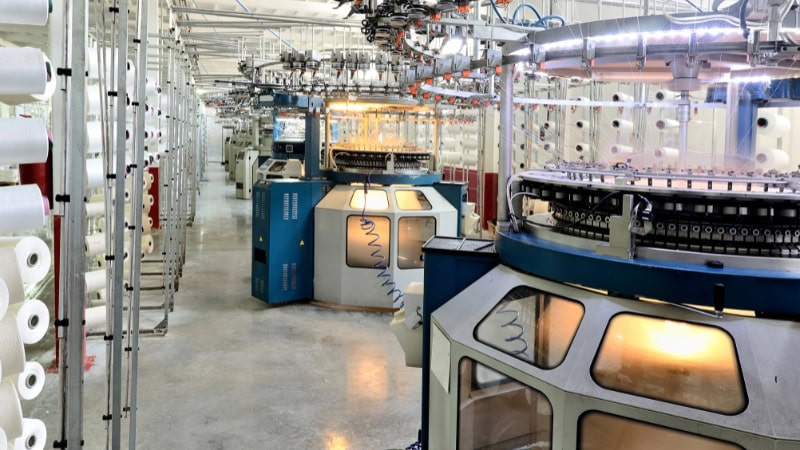
The actual creation of the sock begins on the knitting floor. Modern sock manufacturing uses circular knitting machines. These are highly specialized, computer-controlled devices equipped with hundreds of tiny, rapid-fire needles arranged in a cylinder.
The machine’s automated needles interlock loops of yarn at high speeds, reading the computer’s design code to switch colors or stitch types instantly. For example, it might use a ribbed stitch for the top band so it grips the leg tightly, and a terry loop stitch on the bottom for extra cushioning. Interestingly, the sock does not come out of this machine completely finished. It emerges as an open-ended tube, looking somewhat like a fabric sleeve, because the machine cannot knit a closed toe.
Step 3: Closing the Toe
Because the knitting machines leave the toe area completely open, the socks must move to the seaming department. Closing the toe is a critical step because a poorly sewn seam can rub against the foot and cause painful blisters. There are two primary ways factories close the toe.
- Rosso Linking (Machine Seaming): This is the most common and cost-effective method. A specialized sewing machine stitches the open edges together, leaving a small, slightly raised seam on the inside of the sock. While very durable, this seam can sometimes be felt against the toes.
- Hand-Linking (Seamless): Used for premium and luxury socks, this meticulous process involves matching the individual knit loops on each side of the toe opening and sewing them together flat. The result is a completely smooth interior with no raised ridge, offering maximum comfort.
Step 4: Dyeing and Finishing
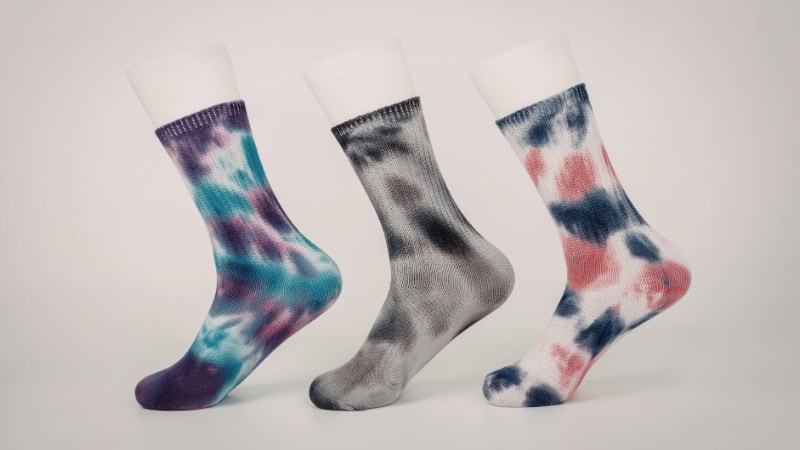
Once the toe is closed, the sock is technically fully formed, but it is not quite ready to wear. If the socks were knitted using plain, uncolored yarn, they will now go through a piece-dyeing process. The white socks are loaded into massive vats of heated water and chemical dyes to absorb their final colors.
However, if the socks feature complex, multi-colored patterns, they were likely knitted using pre-dyed yarns. In this case, they skip the color vats but still undergo a crucial washing phase. The socks are washed thoroughly to remove any machine oils, dust, or excess dye accumulated during the manufacturing process. During this wash, factories often add special softening agents or antimicrobial treatments to keep the socks feeling plush and smelling fresh.
Step 5: Boarding and Shaping
After washing, the socks are clean but look incredibly wrinkled and shapeless. They need to be molded into that crisp, flat, foot-like shape you see when you buy them at the store. This magical transformation happens during a process called boarding.
Workers pull each damp sock over a flat, foot-shaped metal frame called a “board.” Once loaded onto the frames, the socks pass through a specialized machine that blasts them with high-pressure steam and heat. This combination of heat and moisture relaxes the fibers, forcing them to permanently adopt the exact shape of the metal foot.
When the socks emerge from the boarding machine, they are perfectly flat, smooth, completely dry, and look exactly like the finished products we recognize.
Step 6: Quality Control and Packaging
The final step before the socks leave the factory is a rigorous quality control inspection. Human inspectors and automated light sensors examine the batch for any defects. They look for dropped stitches, tiny holes, uneven lengths, or color inconsistencies. Any sock that does not meet the strict standards is pulled from the line and typically recycled.
Once approved, the single socks are finally paired up. A machine swiftly shoots a small plastic thread—known as a swift tack—through the toe or cuff of two matching socks to keep them together. They are then wrapped in cardboard sleeves, tagged with size and care instructions, packed into boxes, and shipped off to retail stores around the world.
About SinoKnit: Your Premier Custom Sock Manufacturer
For over two decades, SinoKnit has established itself as a leading professional custom sock wholesale manufacturer. With more than 20 years of rich industry experience, we are deeply focused on producing a wide variety of high-quality socks tailored to our clients’ exact needs.
Our state-of-the-art factory is equipped with over 300 advanced knitting machines, perfectly illustrating the modern manufacturing techniques discussed above. This impressive technological infrastructure grants us an immense annual production capacity of up to 20 million pairs of socks. By combining high-speed efficiency with precision engineering, we ensure that every bulk order meets our strict quality control standards.
At SinoKnit, we believe that great socks start with premium raw materials. We source only the finest yarns to craft our products, ensuring unmatched comfort, durability, and elasticity. Furthermore, our extensive catalog offers more than 100 distinct styles ready for your custom branding. Whether you need performance-driven sports socks and trampoline socks, specialized gear like equestrian and waterproof socks, or health-conscious diabetic socks, we have you covered.
We proudly export our products to more than 20 countries and regions, including South Korea, Japan, Southeast Asia, the Middle East, Europe, and North America. Wherever your business is located, SinoKnit is dedicated to providing you with the absolute highest quality wholesale socks on the market.
Frequently Asked Questions (FAQs)
How long does it take to make one pair of socks?
Thanks to modern, high-speed automated machinery, the actual knitting of a single sock takes only about three to five minutes. However, when you factor in the toe-closing, washing, drying, boarding, and packaging, the entire start-to-finish manufacturing cycle takes a few days for a large batch.
Why do socks get holes in the heel or toe?
The heel and toe endure the most friction against your shoes and the floor. Even though manufacturers reinforce these areas with strong synthetic fibers like nylon, constant rubbing, sweat, and repeated washing eventually break down the natural fibers (like cotton or wool) over time.
What is the best material for sweaty feet?
If you struggle with sweaty feet, avoid 100% cotton, as it absorbs moisture but dries very slowly. Instead, look for Merino wool or synthetic blends featuring polyester or Coolmax. These materials naturally wick moisture away from your skin and dry rapidly, keeping your feet much more comfortable.