Trampolines have long been a popular form of entertainment, but many standard models are designed with children or lighter users in mind. This often leads heavier adults to forgo the activity due to safety concerns. The good news is that with careful selection, a heavy-duty trampoline can make this fun and beneficial activity accessible to everyone.
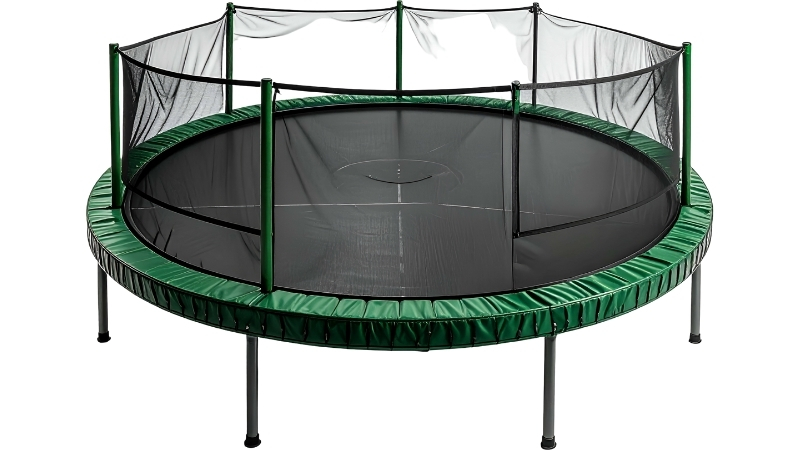
This guide provides a comprehensive overview of the key factors to consider when choosing a trampoline, outlines the main types available, and shows you how to select the right model for your specific needs.
Are Trampolines Safe for Heavy Adults?
Trampolines can be safe for heavy adults if you choose the right design and respect the real weight limits. The main risk is not that “trampolines are dangerous” but that many people use models that are not built for their size or use them in ways they are not designed for.
Most brands list a maximum user weight, but this number can be optimistic. It is often tested under ideal conditions with a new trampoline and no long-term wear and tear. For heavier adults, it is wise to choose a trampoline that is rated significantly above your actual weight. For example, if you weigh around 113 kg, it is best to choose a trampoline with a 136–159 kg rating.
A trampoline is “heavy-duty” when it has a strong steel frame, quality springs or bungees, a thick mat, and proper safety features like a good net and padding. When these elements come together, the trampoline can support higher loads without feeling unstable.
Key Factors to Consider Before Buying a Trampoline
1. Weight Capacity
Weight capacity is the first thing you should check. Do not just ask, “Can this hold my weight?” Ask, “Can this comfortably and safely hold more than my weight over time?”
- Aim for a model with at least 20–30 % higher capacity than your heaviest user.
- If more than one person might be on the trampoline, you need to factor in the combined weight.
- Be aware that cheaper models sometimes exaggerate their limits, so look for brands that have a solid reputation and clear testing standards.
2. Frame Strength
The frame is the backbone of the trampoline, and heavy adults put more stress on it with every jump.
Look for:
- Thick, high-quality steel (galvanized steel is common for rust resistance).
- Sturdy joints and welds, not thin or wobbly connections.
- A wide, stable base with enough legs to prevent tipping or flexing.
Powder-coated or hot-dip galvanized frames resist rust and weather damage better, which is crucial if you will leave the trampoline outside year-round.
3. Springs vs. Springless Systems
Traditional trampolines use metal springs, while some premium models use rods or bungee cords instead.
Springs:
- Pros: Familiar feel, strong bounce, widely available.
- Cons: Can be noisy, may pinch if not well-padded, and cheaper springs can stretch or snap sooner under heavy use.
Springless / Bungee Systems:
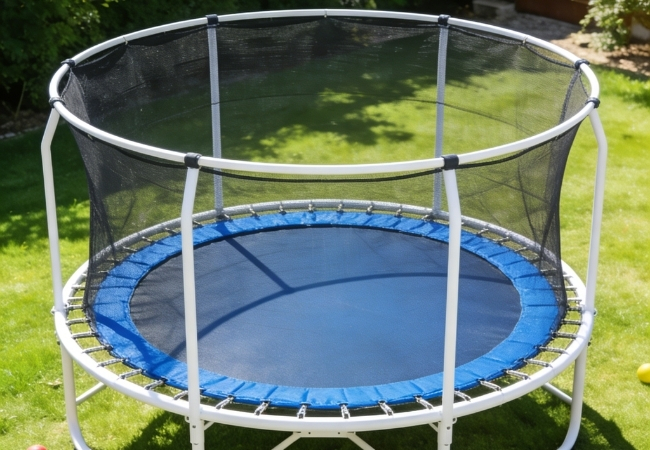
- Pros: Often quieter, fewer pinch points, and can offer a smoother, more controlled bounce.
- Cons: Usually more expensive and sometimes feel different than the classic “trampoline bounce”.
For heavy adults, higher-quality spring trampolines or strong springfree trampolines are worth the extra cost because they handle repeated heavy impacts better.
4. Mat Quality
The jumping mat takes a lot of load, especially in the center where you land most often. Heavy-duty mats use strong polypropylene or similar materials with reinforced stitching.
Key things to notice:
- Multi-row stitching on the edges where the mat connects to the springs or bungees.
- UV-resistant fabric to prevent cracking and fading in the sun.
- A bounce that feels controlled—not so soft that you bottom out, and not so stiff that it jars your knees and back.
If possible, read reviews from users with a similar weight to see how the bounce feels for them.
5. Size and Shape
For heavy adults, the size and shape of the trampoline changes how it feels and how much usable space you really get.
- Round trampolines pull you naturally toward the center and are popular for general backyard fun.
- Rectangular trampolines offer more even bounce across the surface and are favored for sports or gymnastics, but they are typically more expensive.
- Square or oval designs strike a balance between space-efficiency and usable jumping area.
For a single adult, a round trampoline around 12–14 feet (approx. 3.7–4.3 m) is usually comfortable. For multiple users or if you want more room to move, 14–16 feet can feel much better, provided your yard allows it.
6. Safety Features
Safety features matter even more as weight goes up. Look for:
- A high, sturdy safety net with secure attachment points and a zipper or latch that does not easily pop open.
- Thick padding over the springs and frame to avoid cuts and bruises.
- Designs that minimize gaps between the mat and net, so you are less likely to land on the frame.
Anchoring kits are a good idea for outdoor trampolines so that strong jumps or wind gusts do not move or tip the structure.
7. Assembly, Maintenance, and Warranty
Heavy-duty trampolines can take a bit more effort to assemble due to stronger, heavier parts. It is often easier with two adults.
Consider:
- How clear the instructions are and whether tools are included.
- How easy it is to get replacement mats, springs, nets, or pads.
- Warranty coverage: ideally, a long warranty on the frame (often multiple years) and reasonable coverage on the mat and springs.
A solid warranty is a sign that the manufacturer trusts their product under heavier use.
Main Types of Trampolines for Heavy Adults
Heavy adults generally have three main categories to choose from:
- Full-size outdoor trampolines – Best for backyard fun, family use, and bigger movements.
- Fitness mini trampolines (rebounders) – Best for structured workouts, low-impact cardio, and limited spaces.
- Premium springless or bungee-based trampolines – Best if you want extra safety, quieter operation, and long-term durability.
The right choice depends on your goals: do you want to work out, relax and bounce, or combine both?
How to Choose the Best Trampoline
Selecting the best trampolines for adults requires balancing weight capacity, available space, and your primary use—whether for fitness, fun, or advanced training.
Match the Trampoline to Your Goals
- If your main goal is weight loss, cardio, or joint-friendly exercise, a high-quality rebounder rated for heavy adults can be enough. These are ideal if you prefer short, regular workouts over big acrobatic jumps.
- If you want recreational fun for yourself and others, a larger outdoor adult trampoline with a strong weight rating is better. You get more space and variety in how you move.
- If you are into sports, flips, or advanced training, look at higher-end rectangular or premium models, making sure they can handle your weight without losing their bounce characteristics.
Check Your Space Carefully
Before you buy, measure:
- Indoor: ceiling height, floor space, and clearances on all sides. Remember, you need room not just for the trampoline, but for arm movement and safe entry/exit.
- Outdoor: yard dimensions, distance from fences, trees, and hard surfaces. Ideally, you want open space around the trampoline and nothing overhead like branches or wires.
Also, think about access: can you easily get the boxed trampoline into your yard or room?
Single Heavy Adult vs. Multiple Users
Even if the trampoline says it can support a certain weight, most safety guidelines recommend one jumper at a time, especially when adults are involved. Multiple adults bouncing together not only increases total load, but also increases the force of impact if they collide.
If you know more than one adult will occasionally hop on together, choose a model with a significantly higher weight capacity and be honest about how you will actually use it.
Safety Tips for Heavy Adults Using Trampolines
To get the most out of your trampoline and stay safe:
- Start slowly, especially if you have not exercised in a while. Light bouncing and gentle movements still provide benefits without stressing your joints.
- Jump one person at a time, unless the trampoline and your usage plans are very controlled.
- Avoid flips and extreme tricks unless you are properly trained, regardless of your weight.
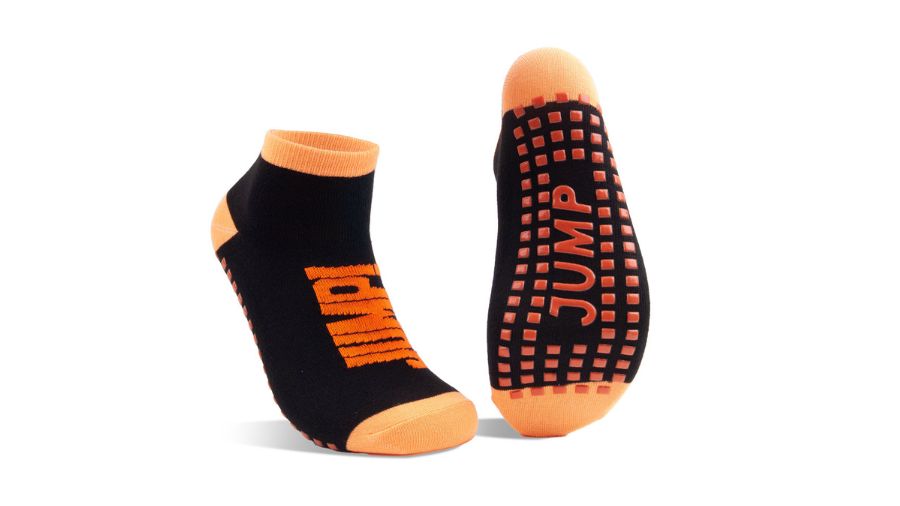
- Jump barefoot or with trampoline grippy socks rather than bulky shoes that can catch or slip.
- Inspect the trampoline regularly: check the frame, springs or bungees, mat, and net for signs of wear, rust, or damage.
- For outdoor models, anchor the legs to the ground and remove or secure loose accessories during storms or high winds.
FAQs
Which adult trampoline can hold the most weight?
Commercial-grade trampolines often hold the most weight, with some heavy-duty rectangular models supporting 400-500 lbs. Always check the manufacturer’s specified user weight limit, not just the frame’s capacity. Quality brands with reinforced springs and thicker mats typically offer higher safe working loads.
Can a 300-pound person jump on a trampoline?
Yes, but they must use a trampoline specifically rated for that weight. Standard home models often have lower limits. A 300 lb person should seek a heavy-duty trampoline (400+ lb capacity) and always jump alone, following all safety guidelines to prevent injury and damage to the mat and springs.
What are the benefits of trampolining?
Rebounding offers low-impact cardio, improves lymphatic circulation, and builds leg strength and balance. It enhances coordination, bone density, and is fun for all ages. It’s an efficient, joint-friendly workout that boosts cardiovascular health and can aid in weight management and overall fitness when done regularly.
What to wear for trampolining?
Wear fitted, stretchy athletic clothing without zippers or buckles. Avoid loose sleeves or pants. Secure footwear like trampoline socks or go barefoot—never wear street shoes. Remove all jewelry. Ensure clothes are free of strings, ties, or anything that could snag on the mat or springs.